
What Is a Comprehensive Eye Exam?
A comprehensive eye exam goes far beyond reading letters on a chart. At PersonalEyes Vision Care, every exam includes over 20 distinct evaluations — from visual acuity and refraction to binocular vision, eye coordination, pupil response, and a complete ocular health assessment. We use advanced technology — including optical coherence tomography (OCT), digital retinal imaging, and automated visual field testing — to detect conditions like glaucoma, macular degeneration, and diabetic retinopathy years before symptoms appear.
Whether you need a new glasses prescription, contact lens evaluation, or medical eye assessment, your exam is tailored to your age, health history, and visual demands. We take the time to explain every finding so you leave informed and confident about your eye health.
Did you know? Many serious eye conditions — including glaucoma and diabetic retinopathy — have no symptoms in their early stages. Annual comprehensive exams are the only way to catch them early, when treatment is most effective.
What We Evaluate
Key Components of Your Exam
Case History & Chief Complaint
We start by reviewing your health history, medications, family eye history, and any current vision concerns to tailor the exam to your needs.
Visual Acuity & Refraction
Distance and near vision testing for each eye, followed by autorefraction and a precise subjective refraction to determine your best prescription.
Binocular Vision & Eye Function
Cover test, eye muscle movements, stereopsis (depth perception), accommodation, color vision, and pupil response — evaluating how your eyes work together.
Tonometry & Visual Fields
Painless eye pressure measurement for glaucoma screening plus confrontation and automated visual field testing to map your peripheral vision.
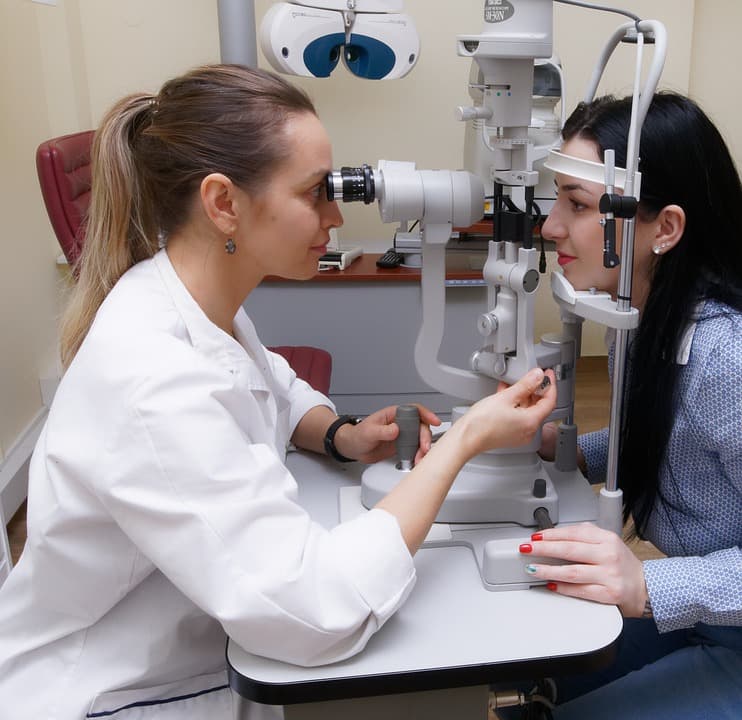
Slit Lamp & Anterior Segment Exam
Detailed evaluation of your eyelids, lashes, cornea, conjunctiva, anterior chamber, iris, and lens to detect cataracts, dry eye, and corneal disease.
Dilated Fundus Exam & Imaging
Examination of the optic nerve, macula, retinal vessels, and periphery — supplemented by OCT imaging and digital retinal photography when indicated.
Our Technology
Advanced Diagnostic Technology
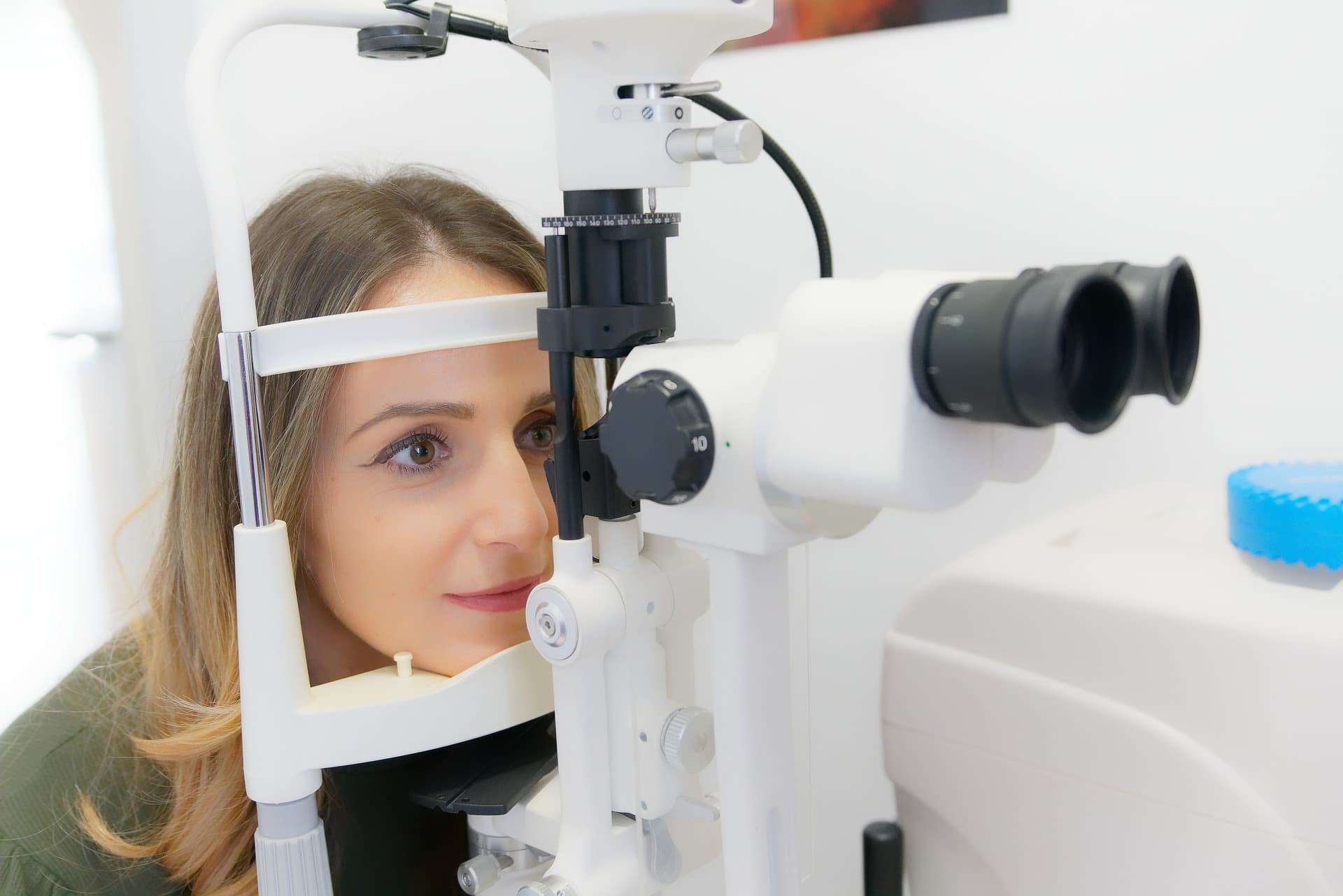
PersonalEyes Vision Care invests in the latest ophthalmic diagnostic equipment to give you the most thorough exam possible. Our technology allows Dr. Patel to detect disease earlier, measure changes more precisely, and provide you with a clear picture of your eye health.
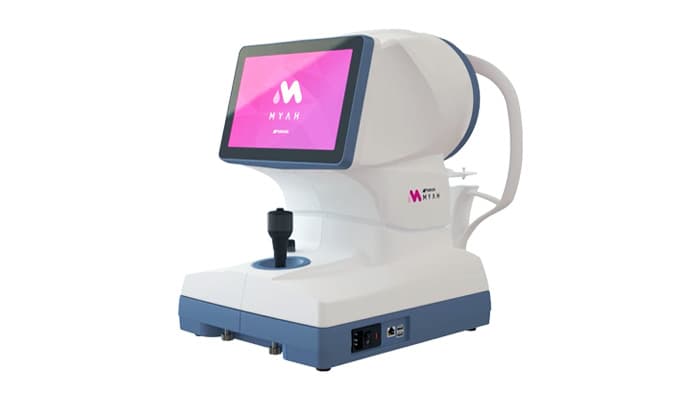
- Optical Coherence Tomography (OCT) — non-invasive cross-sectional imaging that reveals retinal layers at near-cellular resolution, essential for detecting glaucoma and macular degeneration
- Digital Retinal Photography — 22-megapixel high-resolution camera captures detailed images of the retina for comprehensive documentation and early disease detection
- Automated Visual Field Analyzer — maps your peripheral vision to detect early glaucoma, stroke-related vision loss, and neurological conditions
- Corneal Topographer — detailed mapping of the corneal surface for contact lens fitting and keratoconus screening
- A-Scan (Axial Length Measurement) — measures the length of the eye, critical for monitoring myopia progression in children and evaluating amblyopic patients
- Meibography Imaging — infrared imaging of the meibomian glands to assess gland structure and detect dysfunction, a key factor in dry eye disease
- iCare Tonometer — painless, instant eye pressure measurement for glaucoma screening — no dreaded “puff of air” test
Why Flower Mound Trusts PersonalEyes for Eye Exams
Dr. Kumar Patel is a Diplomate of the American Board of Optometry with over 12 years of clinical experience. He combines advanced diagnostic technology with genuine, unhurried patient care — because understanding your eyes is just as important as testing them.
State-of-the-Art Technology
OCT, retinal imaging, and visual field testing for the most thorough exam in the DFW area.
Unhurried & Thorough
Every exam includes time for questions, education, and a full explanation of your results.
All Ages Welcome
From infant eye exams to senior care, we tailor every visit to your life stage and visual needs.
Conveniently located at 2600 Lakeside Parkway, Suite 180, Flower Mound, TX 75022 — proudly serving Flower Mound, Highland Village, Lewisville, Grapevine, Coppell, Lantana, Argyle, and the greater DFW area.
Frequently Asked Questions