Why slowing myopia matters
Myopia (nearsightedness) isn’t just about needing a stronger glasses prescription each year. When a child is nearsighted, the eyeball is growing too long from front to back — and a longer eye carries a higher lifelong risk of serious, sight-threatening conditions, including retinal detachment, glaucoma, early cataracts, and myopic maculopathy. Those risks climb with every additional diopter of progression.
That’s the whole point of myopia control: not to reverse the nearsightedness your child already has, but to slow how much worse it gets — measurably lowering their risk of eye disease decades from now. The good news is that we have four treatments with strong clinical evidence, all available under one roof at PersonalEyes.
The four proven treatments
1. Orthokeratology (Ortho-K)
What it is: custom rigid contact lenses worn overnight that gently reshape the front surface of the eye while your child sleeps. They’re removed each morning, and your child sees clearly all day without glasses or contacts.
How it slows myopia: the reshaped cornea focuses peripheral light in a way that signals the eye to slow its elongation. Best for: active kids and athletes, swimmers, and families who love the freedom of no daytime correction. Requires nightly wear and good lens hygiene. Learn more about Ortho-K →
2. MiSight 1 Day Soft Contact Lenses
What it is: the first soft contact lens FDA-approved specifically for slowing myopia in children. It’s a single-use daily lens worn during the day and thrown away each night.
How it slows myopia: concentric treatment zones create peripheral myopic defocus while keeping central vision crisp. In the manufacturer’s landmark three-year clinical trial, MiSight slowed the progression of myopia by roughly 59% on average versus a standard single-vision lens. Best for: motivated kids comfortable handling a daily lens who want clear vision plus the confidence of contacts. Learn more about MiSight →
3. Stellest Spectacle Lenses
What it is: a myopia-control eyeglass lens — no contacts required. Stellest lenses use a constellation of tiny lenslets surrounding a clear central zone.
How it slows myopia: the lenslets project a volume of myopic defocus in front of the retina to brake elongation, while the center corrects distance vision. In Essilor’s clinical study, children who wore Stellest at least 12 hours a day slowed myopia progression by about 67% on average versus single-vision lenses. Best for: younger children, kids not ready for contacts, or families who prefer a glasses-based option. Learn more about Stellest →
4. Low-Dose Atropine Eye Drops
What it is: a nightly low-concentration eye drop (commonly 0.025%–0.05%). It can be used on its own or alongside a lens-based treatment.
How it slows myopia: atropine acts on biochemical signals involved in eye growth. Low concentrations meaningfully slow progression while minimizing the light-sensitivity and near-blur seen with older, stronger doses. Best for: very young children, kids who can’t yet manage contacts, or as an add-on when a single treatment isn’t enough. Learn more about atropine therapy →
A note on the numbers: study results depend on the population, treatment duration, and how consistently the treatment is used, so real-world outcomes vary child to child. The percentages above come from each treatment’s published clinical research and are best understood as general guidance, not a guarantee.
At a glance
| Treatment | Form | When worn | Often best for |
|---|---|---|---|
| Ortho-K | Rigid lens | Overnight | Athletes; no daytime correction wanted |
| MiSight 1 Day | Soft daily lens (FDA-approved) | Daytime | Motivated kids who want contacts |
| Stellest | Eyeglass lens | All day (12+ hrs) | Younger kids; glasses preferred |
| Low-dose atropine | Eye drop | Nightly | Very young kids; add-on therapy |
How Dr. Patel chooses the right one
Because the treatments are broadly comparable in the research, the decision comes down to your individual child. In a myopia consultation, Dr. Patel weighs:
- Age and progression speed — younger, fast-progressing children need the most protection, and the earliest start.
- Current prescription and eye health — some options suit higher prescriptions or specific corneas better than others.
- Lifestyle — sports, swimming, screen time, and daily routine all point toward certain options.
- Responsibility and comfort — a treatment only works if it’s used consistently, so we match it to what your child will actually stick with.
- Family preference — glasses vs. contacts vs. drops is a real and valid consideration.
Crucially, Dr. Patel doesn’t guess whether a treatment is working — he measures it.
The measurement that sets us apart: axial length
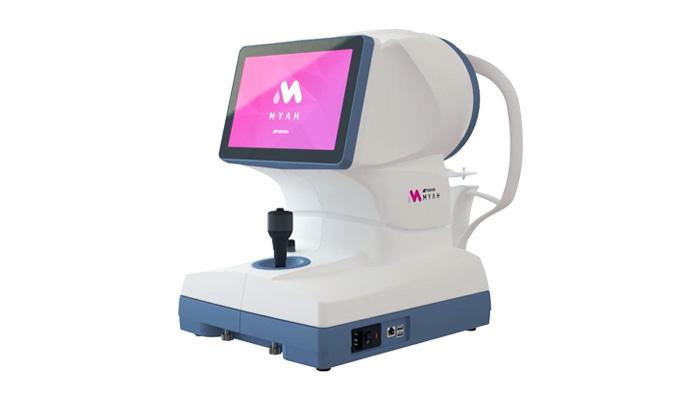
A glasses prescription alone is a blunt tool for tracking myopia. At PersonalEyes, we measure your child’s axial length — the actual front-to-back length of the eye — at each visit. Because myopia progression is eye elongation, axial length is the most direct, objective way to confirm a treatment is working and to catch acceleration early enough to adjust course. It’s the difference between managing myopia by guesswork and managing it with data. Read our full guide to axial length →
Not sure which is right for your child?
Book a myopia consultation with Dr. Patel. We’ll measure your child’s axial length, assess their risk, and build a plan around the option that fits them best.
Frequently asked questions
References
Chamberlain P, et al. A 3-year randomized clinical trial of MiSight lenses for myopia control. Optom Vis Sci. 2019. · Bao J, et al. Myopia control with spectacle lenses with highly aspherical lenslets (Stellest). Br J Ophthalmol. 2022. · Yam JC, et al. Low-Concentration Atropine for Myopia Progression (LAMP) Study. Ophthalmology. 2019/2020. · Cho P, Cheung SW. Retardation of Myopia in Orthokeratology (ROMIO) Study. Invest Ophthalmol Vis Sci. 2012. Figures are approximate and vary by study population and adherence.